Discover how professional paver installation transforms Nassau County properties with lasting beauty, increased value, and expert craftsmanship you can trust.
Share:
Summary:
Nassau County’s competitive real estate market demands outdoor spaces that deliver both immediate impact and long-term value. Professional paver installation addresses the unique challenges Long Island properties face while creating spaces you’ll actually want to use.
The difference between DIY attempts and professional installation becomes clear within the first year. Proper excavation, base preparation, and drainage systems prevent the sinking, shifting, and water damage that plague amateur installations. You’re investing in expertise that understands Nassau County’s soil conditions, drainage requirements, and local building codes.
Nassau County paver installation typically ranges from $16 to $22 per square foot for quality work, with premium materials and complex designs reaching $30 per square foot. This investment reflects the expertise required for Long Island’s specific challenges, from sandy soils to drainage concerns.
The cost breakdown includes proper excavation, base preparation, quality materials, and skilled installation. A 400-square-foot patio averages $6,400 to $8,800, while larger projects benefit from economies of scale. Remember that the cheapest quote often signals corners being cut on crucial elements like base depth or drainage solutions.
Quality installation pays for itself through longevity and performance. Properly installed pavers last 25 to 50 years with minimal maintenance, while poor installation requires costly repairs within just a few years. Factor in Nassau County’s median home value of $785,973 – your outdoor spaces should reflect and enhance that investment.
Consider financing options many contractors offer, making quality installation accessible without compromising your project’s integrity. The monthly payment for professional installation often costs less than repeatedly fixing DIY mistakes or hiring contractors to redo substandard work.
Nassau County paver installation typically ranges from $16 to $22 per square foot for quality work, with premium materials and complex designs reaching $30 per square foot. This investment reflects the expertise required for Long Island’s specific challenges, from sandy soils to drainage concerns.
The cost breakdown includes proper excavation, base preparation, quality materials, and skilled installation. A 400-square-foot patio averages $6,400 to $8,800, while larger projects benefit from economies of scale. Remember that the cheapest quote often signals corners being cut on crucial elements like base depth or drainage solutions.
Quality installation pays for itself through longevity and performance. Properly installed pavers last 25 to 50 years with minimal maintenance, while poor installation requires costly repairs within just a few years. Factor in Nassau County’s median home value of $785,973 – your outdoor spaces should reflect and enhance that investment.
Consider financing options many contractors offer, making quality installation accessible without compromising your project’s integrity. The monthly payment for professional installation often costs less than repeatedly fixing DIY mistakes or hiring contractors to redo substandard work.
Want live answers?
Connect with a Raffaele Outdoor Concepts expert for fast, friendly support.
Professional paver installation follows proven processes that address Nassau County’s specific challenges. The process begins with site evaluation, examining drainage patterns, soil conditions, and existing structures. This assessment determines excavation depth, base requirements, and drainage solutions.
Proper planning prevents the common problems that plague DIY installations. We map utilities, obtain necessary permits, and create detailed plans that account for water management. This upfront investment in planning saves significant costs and headaches later.
Excavation depth varies based on intended use and soil conditions, typically 8 to 12 inches for patios and 12 to 16 inches for driveways. Nassau County’s varied soil conditions require experienced assessment – sandy areas need different approaches than clay-heavy zones.
Base preparation involves multiple layers of carefully selected and compacted materials. The bottom layer uses larger aggregate for stability and drainage, while upper layers provide smooth, level surfaces for paver placement. Each layer requires proper compaction using specialized equipment that DIY installations rarely access.
Drainage integration happens during base preparation, not as an afterthought. French drains, catch basins, and proper grading direct water away from structures and prevent the pooling that causes paver failure. Nassau County’s drainage requirements often exceed basic installation practices, making professional expertise essential.
Edge restraints install during base preparation, providing the structural support that keeps pavers in place long-term. Plastic edging fails in Nassau County’s climate, while concrete or aluminum restraints provide lasting stability. Proper installation secures these restraints below frost lines and accounts for seasonal movement.
Quality contractors take time with base preparation because we understand it determines project success. Rushing this phase creates problems that surface months or years later, requiring expensive repairs that often cost more than proper initial installation.
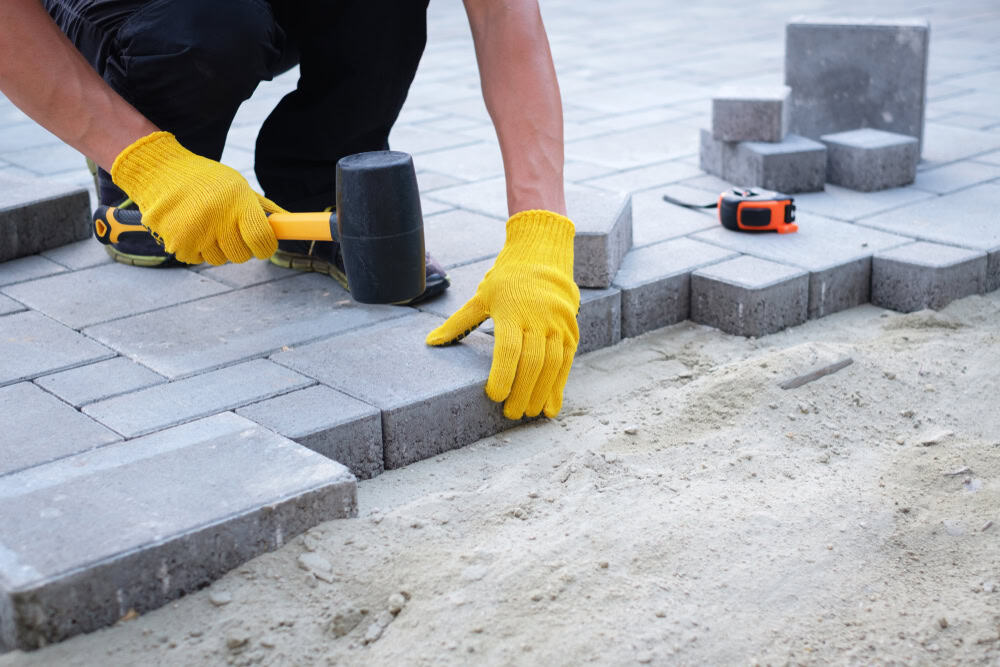
Paver placement requires precision and experience to achieve professional results. Starting points and reference lines determine pattern accuracy, while proper spacing ensures consistent joint widths. Experienced installers work systematically, checking levels continuously and making adjustments before problems compound.
Cutting pavers requires specialized equipment and safety knowledge. Professional installers use diamond-blade saws and proper safety equipment, achieving clean cuts that maintain structural integrity. Poor cuts create weak points that fail under stress, while professional cuts integrate seamlessly into overall patterns.
Joint filling uses polymeric sand that hardens when activated, creating stable connections between pavers while preventing weed growth and ant infiltration. Application requires specific techniques and timing – too much moisture ruins the sand, while insufficient activation leaves joints vulnerable to erosion.
Final compaction settles pavers into their sand bed and activates joint sand properly. Professional plate compactors provide even pressure without damaging paver surfaces, while improper equipment can crack or chip pavers. This final step locks everything in place and prepares surfaces for immediate use.
Sealing provides additional protection against stains and weather damage, though timing matters. Newly installed pavers need curing time before sealing, and Nassau County’s climate affects optimal application windows. We understand these timing requirements and recommend appropriate maintenance schedules.
The finishing process includes cleanup, final inspection, and client walkthrough. We explain maintenance requirements and provide care instructions specific to your materials and installation. This education helps you protect your investment and maintain optimal appearance.
Your paver installation project deserves expertise that understands Nassau County’s unique requirements and delivers results that enhance your property for decades. Look for contractors with proven local experience, proper licensing and insurance, and portfolios showcasing quality work in your area.
The right installation partner combines technical expertise with clear communication, helping you navigate material choices, design options, and maintenance requirements. We understand local regulations, drainage challenges, and the climate factors that affect long-term performance.
At Raffaele Outdoor Concepts, we bring over 25 years of masonry expertise to every project. Our commitment to quality craftsmanship and customer satisfaction ensures your outdoor spaces deliver the beauty, functionality, and value your home deserves.
Article details:
Share:
Continue learning:
Ready to Fix That Masonry for Good?
Let’s talk about your project. No pressure, just honest answers and a quote you can count on from Nassau County’s trusted masonry professionals.
Company
Links